

Saltwater pools are easier to live with than traditional chlorine pools, but the salt cell still needs attention. When scale builds up on the plates inside the cell, chlorine production drops, warning lights start blinking, and the pool can turn cloudy even when the water looks balanced on paper.
The good news: most salt cell problems are preventable. A quick inspection every few weeks and a careful cleaning only when it is actually needed will keep the system producing chlorine without wearing the cell out early.
How often should you clean a salt cell?
Check the salt cell about once a month during swim season. That does not mean you should acid-wash it every month. It means you should remove the cell, look through the chamber, and check for white, gray, or tan calcium scale on the metal plates.
If the plates are clean, put it back and move on. Over-cleaning with acid shortens the life of the cell. Only clean it when you can see scale or when the system shows low-output warnings that match what you are seeing inside the cell.
Balance the water before blaming the salt cell
High pH, high calcium hardness, and high alkalinity make scale form faster. Before you acid-wash the cell again, check the actual pool chemistry.
Pool Chemical Calculator helps you calculate pH, alkalinity, chlorine, stabilizer, and calcium adjustments without guessing.
Download for iPhone/iPad · Download for Android · Use the website
What causes scale inside a salt cell?
Scale forms because the environment inside a salt chlorine generator is harsh. As the cell produces chlorine, the pH right around the plates rises. If your pool already runs with high pH, high calcium hardness, or high total alkalinity, the cell becomes the first place calcium wants to collect.
Common causes include:
- pH drifting above 7.8 for long periods
- Calcium hardness running high, especially in warm climates or hard-water fill areas
- Total alkalinity too high, which makes pH rise faster
- Low water flow through the cell from a dirty filter, closed valve, or weak pump runtime
- Running the salt system too hard because stabilizer is low or chlorine demand is high
If the cell scales up again a week after cleaning, the cell is not the real problem. The water balance is.
How to inspect the salt cell safely
- Turn off power to the salt system and pump.
- Close valves if your plumbing requires it.
- Unscrew or disconnect the cell according to the manufacturer instructions.
- Look through the cell in bright light.
- Check for calcium flakes, crusty white deposits, or blocked plates.
Do not scrape the plates with metal tools. If a garden hose removes the debris, use the hose and skip the acid. Acid should be the backup plan, not the first move.
Salt cell cleaning supplies that help
A basic salt cell cleaning stand or cap makes the job cleaner and safer because it lets you soak only the cell chamber instead of dunking the whole unit. You can also use a pool-safe descaler if your manufacturer allows it. For parts and maintenance gear, compare salt cell cleaning stands and pool maintenance supplies on Amazon.

How to clean a salt cell without overdoing it
Always follow the manual for your specific brand, but the general process is simple:
- Rinse loose debris out with a garden hose.
- If scale remains, use the manufacturer-approved cleaning solution.
- Soak only as long as needed for bubbling to slow and scale to release.
- Rinse thoroughly before reinstalling.
- Restart the pump and check for leaks.
If you use muriatic acid, weaker and shorter is better. Strong acid or long soaks can strip coating from the cell plates and shorten cell life. A cell that is cleaned gently and only when needed will usually last much longer than one that gets acid-washed on a calendar schedule.
How to prevent salt cell scale from coming back
The best salt cell maintenance happens in the pool water, not in a bucket of acid. Keep pH under control, test alkalinity regularly, and watch calcium hardness if your fill water is hard.
For most saltwater pools, these habits make the biggest difference:
- Test pH at least weekly during warm weather.
- Keep total alkalinity in a range that does not cause constant pH rise.
- Clean the filter so flow through the cell stays strong.
- Keep stabilizer/CYA in the range recommended by your salt system.
- Inspect the cell monthly, but only clean when scale is visible.
If your system has a reverse-polarity self-cleaning feature, that helps slow scale buildup, but it does not replace balanced water.
When cleaning is not enough
A salt cell has a limited life. If the plates are clean, salt level is correct, water temperature is warm enough, flow is good, and the system still reports low output, the cell may be nearing the end of its service life.
Before replacing it, confirm the basics: actual salt level with an independent test, clean filter pressure, no air in the system, correct pump runtime, and water chemistry in range. Replacing a cell because of bad water balance is an expensive mistake.
Recommended saltwater pool supplies
As an Amazon Associate, SaltyPool earns from qualifying purchases.

Lowers rising pH and helps manage alkalinity in saltwater pools.
View on Amazon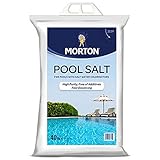
Keeps saltwater chlorine generators in range without unnecessary additives.
View on Amazon
Useful when cloudy water, algae, or heavy swimmer load outruns normal salt output.
View on AmazonFAQ
Should I clean my salt cell every month?
No. Inspect it monthly, but only clean it when you see scale or buildup. Cleaning too often with acid can shorten the cell’s life.
Can a dirty salt cell cause cloudy water?
Yes. If the cell is scaled, it may produce less chlorine than expected. That can let algae or organic contamination build up, which often shows up as cloudy water.
What is the safest way to clean a salt cell?
Start with a garden hose. If scale remains, use the manufacturer-approved cleaning solution and soak only as long as needed. Avoid scraping the plates with metal tools.
Why does my salt cell get scale so fast?
Fast scale buildup usually points to high pH, high calcium hardness, high alkalinity, poor flow, or a combination of those issues.
Do saltwater pools still need water testing?
Absolutely. A salt system makes chlorine, but it does not automatically balance pH, alkalinity, stabilizer, or calcium hardness.
Bottom line: the salt cell is the engine of your saltwater pool. Keep the water balanced, inspect the cell often, and clean it only when the plates actually need it.
Before your next adjustment, run the numbers with Pool Chemical Calculator. It is available for iPhone/iPad and Android.
Disclosure: This post contains Amazon affiliate links. As an Amazon Associate, Salty Pool may earn from qualifying purchases.

